Sunday, January 31, 2010

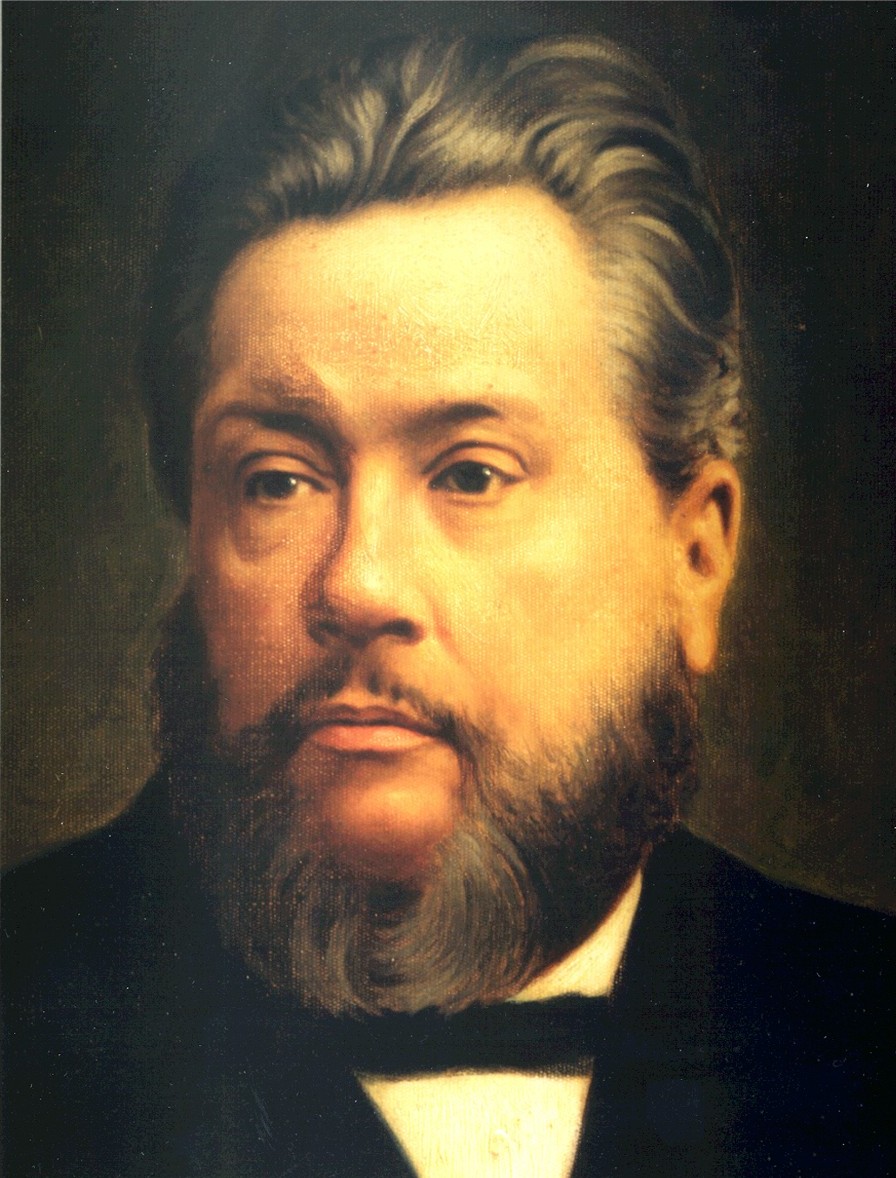
Charles Spurgeon - Sinking times are praying times


“Beginning to sink, he cried, saying, Lord, save me.”
- Matthew 14:30

Sinking times are praying times with the Lord’s servants. Peter neglected prayer at starting upon his venturous journey, but when he began to sink his danger made him a suppliant, and his cry though late was not too late. In our hours of bodily pain and mental anguish, we find ourselves as naturally driven to prayer as the wreck is driven upon the shore by the waves. The fox hies to its hole for protection; the bird flies to the wood for shelter; and even so the tried believer hastens to the mercy seat for safety. Heaven’s great harbour of refuge is All-prayer; thousands of weather-beaten vessels have found a haven there, and the moment a storm comes on, it is wise for us to make for it with all sail.

Short prayers are long enough. There were but three words in the petition which Peter gasped out, but they were sufficient for his purpose. Not length but strength is desirable. A sense of need is a mighty teacher of brevity. If our prayers had less of the tail feathers of pride and more wing they would be all the better. Verbiage is to devotion as chaff to the wheat. Precious things lie in small compass, and all that is real prayer in many a long address might have been uttered in a petition as short as that of Peter.

Our extremities are the Lord’s opportunities. Immediately a keen sense of danger forces an anxious cry from us the ear of Jesus hears, and with him ear and heart go together, and the hand does not long linger. At the last moment we appeal to our Master, but his swift hand makes up for our delays by instant and effectual action. Are we nearly engulfed by the boisterous waters of affliction? Let us then lift up our souls unto our Saviour, and we may rest assured that he will not suffer us to perish. When we can do nothing Jesus can do all things; let us enlist his powerful aid upon our side, and all will be well.

Thursday, January 28, 2010

Notable quotables

To love at all is to be vulnerable. Love anything, and your heart will certainly be wrung and possibly be broken. If you want to make sure of keeping it intact, you must give your heart to no one, not even to an animal. Wrap it carefully round with hobbies and little luxuries; avoid all entanglements; lock it up safe in the casket or coffin of your selfishness. But in that casket — safe, dark, motionless, airless — it will change. It will not be broken; it will become unbreakable, impenetrable, irredeemable. The alternative to tragedy, or at least to the risk of tragedy, is damnation. The only place outside of Heaven where you can be perfectly safe from all the dangers and perturbations of love is Hell.


-C.S. Lewis

Monday, January 25, 2010

Monday music smile

Stanley Jordan (the Michael Jordan of guitar) has a way of making one guitar sound like two or three. Here is his rendition of Over the Rainbow.

Sunday, January 24, 2010

Charles Spurgeon - Cares of the world and a cold heart


“Turn away mine eyes from beholding vanity; and quicken thou me in thy way.”
- Psalms 119:37


There are divers kinds of vanity. The cap and bells of the fool, the mirth of the world, the dance, the lyre, and the cup of the dissolute, all these men know to be vanities; they wear upon their forefront their proper name and title.
Far more treacherous are those equally vain things, the cares of this world and the deceitfulness of riches. A man may follow vanity as truly in the counting-house as in the theatre. If he be spending his life in amassing wealth, he passes his days in a vain show.

Unless we follow Christ, and make our God the great object of life, we only differ in appearance from the most frivolous. It is clear that there is much need of the first prayer of our text. “Quicken thou me in thy way.” The Psalmist confesses that he is dull, heavy, lumpy, all but dead. Perhaps, dear reader, you feel the same. We are so sluggish that the best motives cannot quicken us, apart from the Lord himself. What! will not hell quicken me? Shall I think of sinners perishing, and yet not be awakened? Will not heaven quicken me? Can I think of the reward that awaiteth the righteous, and yet be cold? Will not death quicken me? Can I think of dying, and standing before my God, and yet be slothful in my Master’s service? Will not Christ’s love constrain me? Can I think of his dear wounds, can I sit at the foot of his cross, and not be stirred with fervency and zeal? It seems so!

No mere consideration can quicken us to zeal, but God himself must do it, hence the cry, “Quicken thou me.” The Psalmist breathes out his whole soul in vehement pleadings: his body and his soul unite in prayer. “Turn away mine eyes,” says the body: “Quicken thou me,” cries the soul. This is a fit prayer for every day. O Lord, hear it in my case this night.

Saturday, January 23, 2010

The outrageous love of God

There is an aspect of God's love and forgiveness that is simply offensive to our human sensibilities. We are not offended by His love and forgiveness for us, but we are easily offended by the notion that God is willing to forgive the "worst kind of sinner". Think about it, what is the worst thing someone has done to you or someone you love? What if that person truly repented and cried out to God for forgiveness. Does that thought comfort you?

Truth be told, we are probably more like Jonah than we would like to admit. When God told Jonah to preach to the Ninevites, his first response was to catch the first ship in another direction. The Ninevites were a cruel, bloodthirsty people who dealt harshly with the Jewish people. Of course, when he finally obeyed God and warned Nineveh of pending judgement, the entire kingdom repented in sackcloth and ashes. This resulted in God's forgiveness of Nineveh, and Jonah's anger:
But Jonah was greatly displeased and became angry. He prayed to the LORD, “O LORD, is this not what I said when I was still at home? That is why I was so quick to flee to Tarshish. I knew that you are a gracious and compassionate God, slow to anger and abounding in love, a God who relents from sending calamity. Now, O LORD, take away my life, for it is better for me to die than to live.” - Jonah 4:1-3
Or, consider the parable of the Prodigal Son (Luke 15:11-31). We all know the story. The younger son demanded his inheritance, which was a great insult by itself. To add insult to injury, he also squandered his inheritance on loose living.

After his money ran out and he came to his senses, he decided to go home. His heart was broken and contrite. He would not dare ask to be restored as a son. His only hope was to work as a hired hand and, in some way, make restitution for what he had done. But his father would have none of it. As soon as he saw his son from a distance, he ran to him and smothered him with kisses. This was very undignified behavior for a family patriarch. He immediately forgave his wayward child, restored him to full sonship and had a lavish celebration. All of this greatly displeased the elder brother.
The older brother became angry and refused to go in. So his father went out and pleaded with him. But he answered his father, 'Look! All these years I've been slaving for you and never disobeyed your orders. Yet you never gave me even a young goat so I could celebrate with my friends. But when this son of yours who has squandered your property with prostitutes comes home, you kill the fattened calf for him!' - Luke 15:28-20
There it is again, the scandal of forgiveness. It was a scandal that this father would so readily forgive his son; a son who had lived so wantonly and disgraced the family name.

Corrie ten Boom faced a similar dilemma as a WWII concentration camp survivor. Many years after her release, she was approached by a former concentration camp guard who was one of the cruelest. In the many years that passed, his eyes where opened, and he also had come to faith in Christ. He extended his hand to shake hers and, for a moment, Corrie hesitated. Then she reached out and took his hand; at that moment forgiveness flooded her heart.

She would later write about that incident saying, "For a long moment we grasped each other's hands, the former guard and the former prisoner. I had never known God's love so intensely as I did then."


Once again, there it is, a scandal. How could anyone forgive a Nazi, a prodigal, or a Ninevite? To many, the very notion of doing so is absurd. That is certainly how Jonah must have felt. The Ninevites were every bit as cruel as the Nazis.


Bob Glenn of Redeemer Bible Church takes a look at the issue of forgiveness in a message called "The Outrageous Love of God". Glenn makes the point that we must understand the scandal of God's forgiveness to understand the greatness of God's forgiveness. You can listen at the link below.

The Outrageous Love of God

Thursday, January 21, 2010

Notable quotables

“Scripture makes clear that there is indeed a way to God, but that it is not based on anything men themselves can do to achieve or merit it. Man can be made right with God, but not on his own terms or in his own power. In that basic regard Christianity is distinct from every other religion. As far as the way of salvation is concerned, there are therefore only two religions the world has ever known or will ever know—the religion of divine accomplishment, which is biblical Christianity, and the religion of human achievement, which includes all other kinds of religion, by whatever names they may go under.”
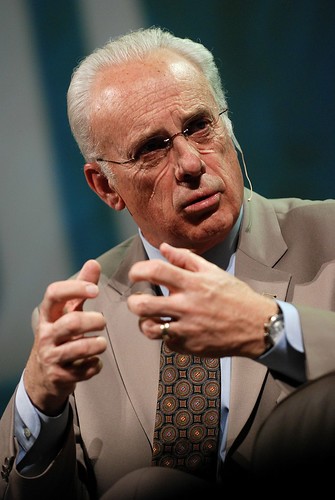
—John MacArthur